
“Wuthering Heights” (2026) Review
A Fennell production through and through
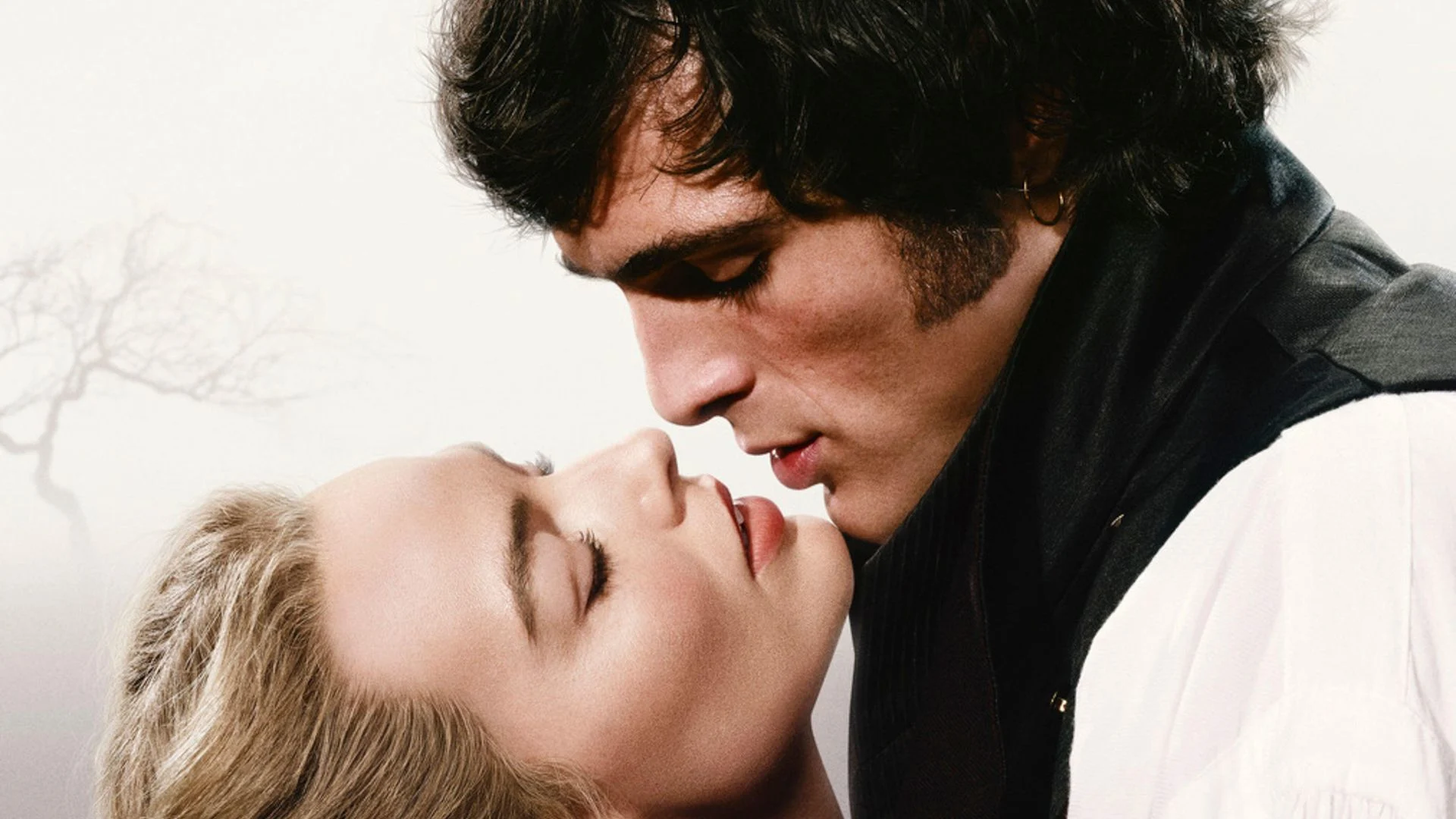
— jeff, published Mar 12, 2026
If there’s one thing that Emerald Fennell excels at, it’s crafting an aesthetically pleasing cinematic experience. From Promising Young Woman to Saltburn, there was always a clear focus on set design, costuming, positioning and framing, a focus that has caused her films to earn the pejorative title of “tumblrcore.”
So, it was not surprising to see that “Wuthering Heights” is no exception, following closely to the same “aesthetics-first” style showcased in Saltburn.
Controversy
This focus on airy, maximalist aesthetics has been a big controversy for Fennell, especially during the release of Saltburn, which continues to be controversial for its perceived lack of depth and vapid socio-cultural musings.
Complaints of Fennell being “posh” and not understanding working class issues have gotten extremely popular in the past few years, with many decrying her films as intentionally softening any true critiques of class. I personally don’t think that every film needs to be contextually deep, and Saltburn itself was enjoyable enough as a sort of beautifully crafted, airy ‘Ripley-lite’, but alas, I seem to be in the minority with this opinion.
With “Wuthering Heights”, these critiques of Fennell have only gotten more pointed, sharp, and increasingly passionate. In large part, this is due to this film being a loose adaptation which mostly strays from the novel’s core themes and narrative structure. In doing so, for better or for worse, Fennell’s version of Wuthering Heights has essentially alienated most modern fans of the book.
The largest critiques from the modern literary crowd seem to be based around the opinion that Fennell saw a romantic vision within Wuthering Heights, instead of focusing on the tumultuous, often abusive dynamic between its main characters, Heathcliff and Catherine. Perhaps it’s fair, given that this was marketed as an adaptation (and not simply “inspired by”), but I personally give a ton of creative and narrative leeway to adaptations, yet fans of the book seem to take any sort of artistic or narrative deviation as a crime against literature itself. Tough crowd.
Perhaps the most confusing critique is that Fennell intentionally erased the books racial element. Where Fennell’s Heathcliff is played by Jacob Elordi, modern fans of the novel interpreted the character as having a darker complexion- perhaps Turkish, perhaps from Northern Africa. The fact that the book itself doesn’t make this very clear, and doesn’t find critiques of race relations relevant enough to actually clarify this, it makes me feel like this critique doesn’t matter enough to warrant the types of scathing criticisms the film has been receiving on the basis of casting choices alone.
Narrative, Characters, and Performances
In the film, Catherine is the daughter of the Patriarch of Wuthering Heights, a once wealthy estate that has since begun to literally wither away under the drunken abuses of Catherine’s father. Living in such a place, a young Catherine finds companionship with Heathcliff, a similarly aged boy doomed to a life of squalor as one of the estates’ many servants.
Jacob Elordi delivers his absolute best performance considering the minimalist script that he was given. In every single seen he is in, he is completely entrancing as Heathcliff. In the first act, he totally embodies the adult Heathcliff, still lingering in servitude, who is meek and quiet, but who exudes a powerful aura of mystery and masterfully controlled rage.
Through Elordi, you can feel how difficult it must have been for Heathcliff to endure the type of abuses and dehumanization he did, all so that he could stay close to the only person he’s ever loved, Catherine.
At a certain point, his character disappears, and when he returns, he’s no longer the sad, reserved man he once was, and Elordi transforms him into a vengeful, spiteful, but still completely enamored man. His acting here is brilliant, especially given how little dialogue and characterization he was given to work with. A simple gold tooth and a menacing scowl was all that it took to understand what he may have gone through in his time away from Wuthering Heights, and Elordi does a fantastic job in transitioning between these two versions of Heathcliff.
Margot Robbie’s performance as Catherine was actually quite solid, and her scenes with Elordi are all fantastic, especially when the film gets into dramatic, passionate territory. Unfortunately, I think her casting occasionally suffers from some of the issues with Fennell’s changes to the book, in particular, the choice to change Catherines age for the script. In the book, Catherine is 18, which would have better matched the pouty, selfish and air-headed character that Fennell wrote as being approximately 30 years old. Robbie’s portrayal of a 30 year old Catherine, then, sometimes feels like an infantilized, petty, self-destructive adult who should already know better. Again, this is mostly an issue with Fennell’s script, and not Robbie’s acting itself. For much of the film, Her chemistry with Elordi was palpable, and the few steamier scenes they have with each other read as intimate, passionate, and occasionally heart wrenching.
Design
As I mentioned, the aesthetics of the film are pretty breathtaking, with unique, anachronistic choices that fly in the face of a period piece. Sometimes these are in service of a dream-like sequence, where costumes and set pieces morph away from the era the film is set in, and at other times the choices are romantic and stylized, like the blood red sky lighting up a scene to showcase passion and the connection between sex and violence. There’s also a very calculated aesthetic juxtaposition between the gothic, grody aura of the Wuthering estate and the almost candy-coated, flamboyant sheen of the Linton estate.
In totality, it’s a Fennell production through and through, and that comes with its own critical baggage for some people. If you can separate your mind from the novel, and experience the film as a Fennell original, you will certainly find much more enjoyment from “Wuthering Heights”.